
Quick Look: Attack on Iran Redux
My top three initial thoughts on the U.S. and Israel war* with Iran

I have decided to occasionally publish “quick looks” when other commitments delay or prevent the publishing of a full article. I, as probably most intelligence professionals who have participated in or supported war planning against Iran, foresaw pretty much everything that Iran is currently doing.
Disclaimer: This “quick look” is not political. Rather, it is based on my experience as a former military intelligence officer and operational planner who led intelligence and other projects on Iran, led the intelligence portion of counter-WMD projects, and initiated and led the overhaul of a major U.S. counterterrorism plan in the Middle East (which led to the identification of more than 120 terrorist targets).
Below are my top three initial thoughts on the U.S. and Israel war* with Iran, while I tweak my more detailed article. Some of these are my repeat thoughts about the strikes on Iran last summer that I’ve posted on some platforms.
(*Yes, it is a war. Calling it anything else, including if the rationale is because Congress hasn’t declared a war, is euphemistic eyewash and garbage gibberish on the same level as Putin’s use of “special military operations” to describe his failing Russia-Ukraine war.)
Deal Breaker
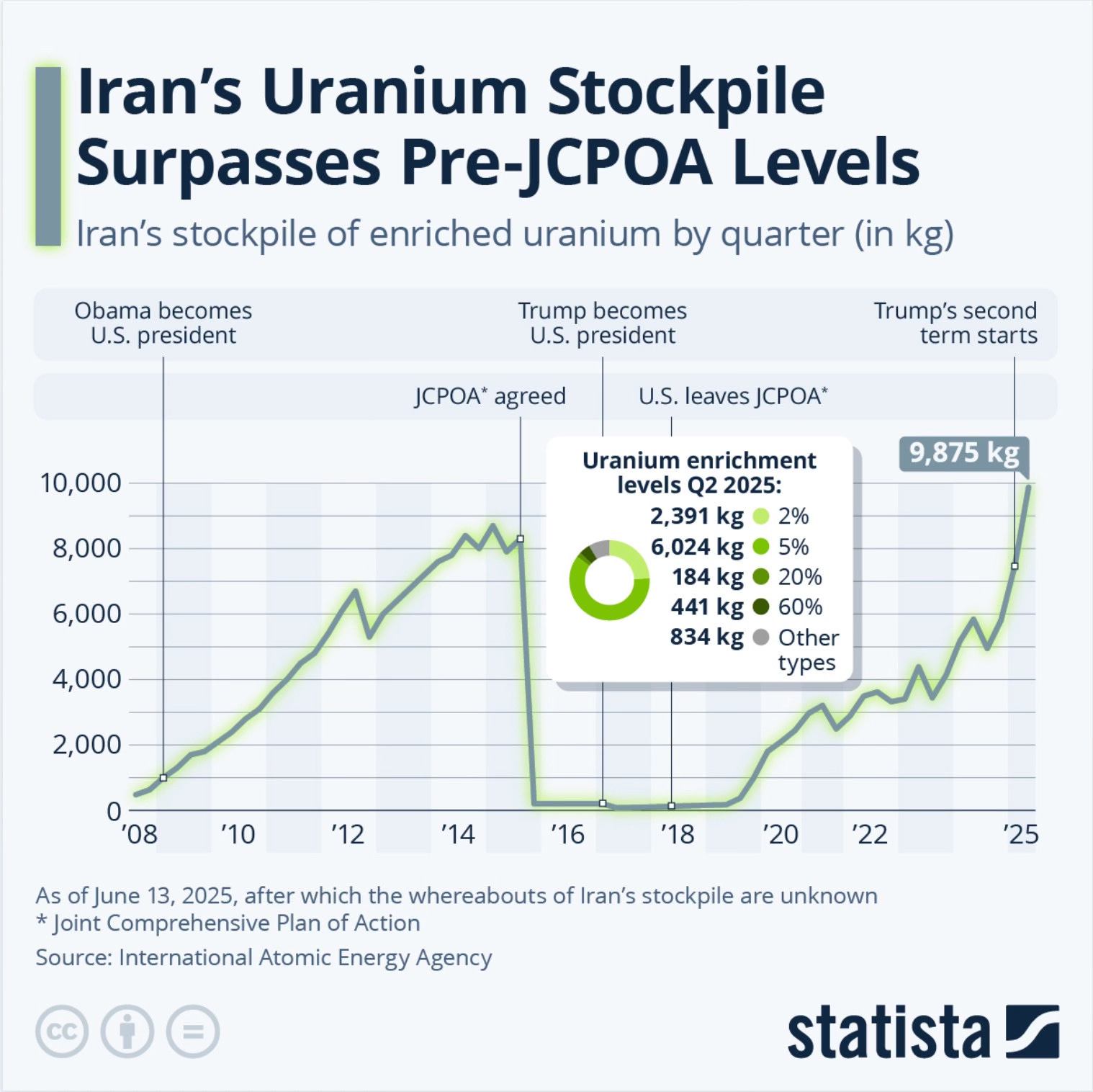
1. The world is in this situation because Donald Trump, during his first administration, left the Joint Comprehensive Plan of Action (JCPOA) nuclear deal in 2018. Even his own national security team and government agencies at the time said the deal was working, with Iran limiting its uranium enrichment.
We Can Do It All
2. Always be skeptical when you hear absolutist objectives such as “eliminate”, “obliterate”, and “destroy”. Politicians are the worst culprits, followed by many pundits and talking heads. Not even the U.S. military can accomplish most absolutist objectives. Based on my experience, this can be a surprising and unsatisfying realization for many political appointees. It is impossible to “eliminate”, “obliterate”, or “destroy” a nuclear program—or any WMD program—with only airstrikes. A full-scale invasion or the country surrendering its WMD program would be required.
Related, I do not know of any example where air power by itself caused regime change. In fact, attempting regime change via air power is probably like Italian rap music (seen during the 2026 Winter Olympics opening ceremony)—just because you can try it does not mean you should.
Did you think I’d lay down and die? Oh, no, not I, I will survive
3. The ultimate strategic objective of Iran’s theocracy is regime survival. A worst case scenario could occur if the theocracy thinks that its survival is at stake (the same for North Korea’s dictatorship). It should be of no surprise that Iran would lash out against the Gulf countries, including their energy infrastructure, if Israel and the U.S. systematically targeted the regime’s senior leaders. It would not surprise me if in the following days, weeks, or months there are news reports that U.S. and Israeli intelligence agencies had advised policy makers that Iran would attack Gulf countries beyond just U.S. bases if it perceived the regime was targeted and especially if regime survival was at stake. The same for the Iranian actions discussed below.
Oily and Gassy
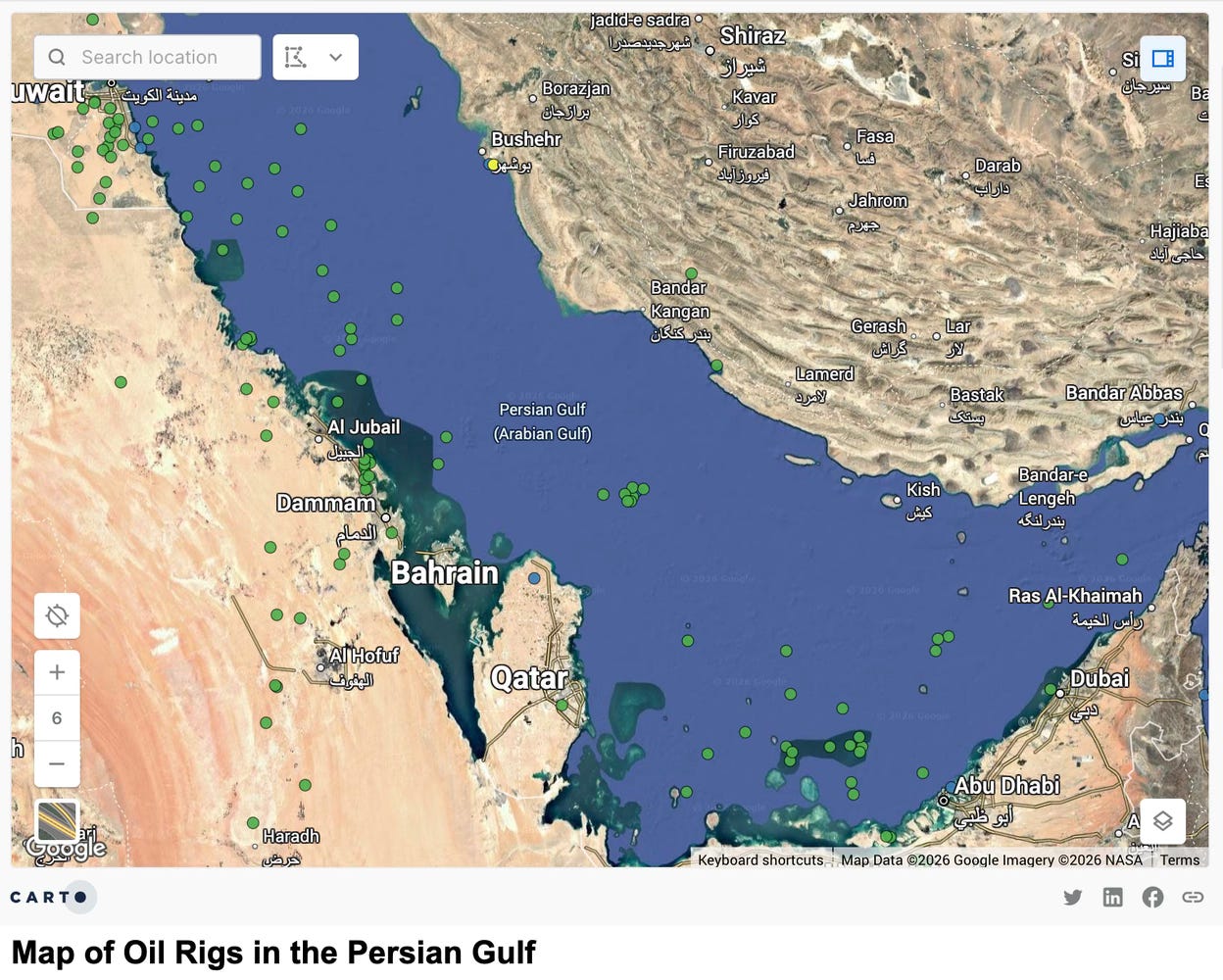
I am surprised that Iran has not attacked more offshore oil platforms operated by its Gulf neighbors. But airstrikes might have degraded the ability of Iran’s Islamic Revolutionary Guard Corps (IRGC) navy, regular navy, and missile units to target these oil rigs. Regardless, expect continued Iranian targeting of oil and gas infrastructure, limited only by degraded Iranian command, control, and communications and the attrition of Iranian weapons. Iranian Minister of Foreign Affairs Abbas Araghchi told Al Jazeera that Iran’s military command had been interrupted, with units acting in an “independent and somewhat isolated” way. He said they were operating “based on general instructions given to them in advance”.
Your Mine
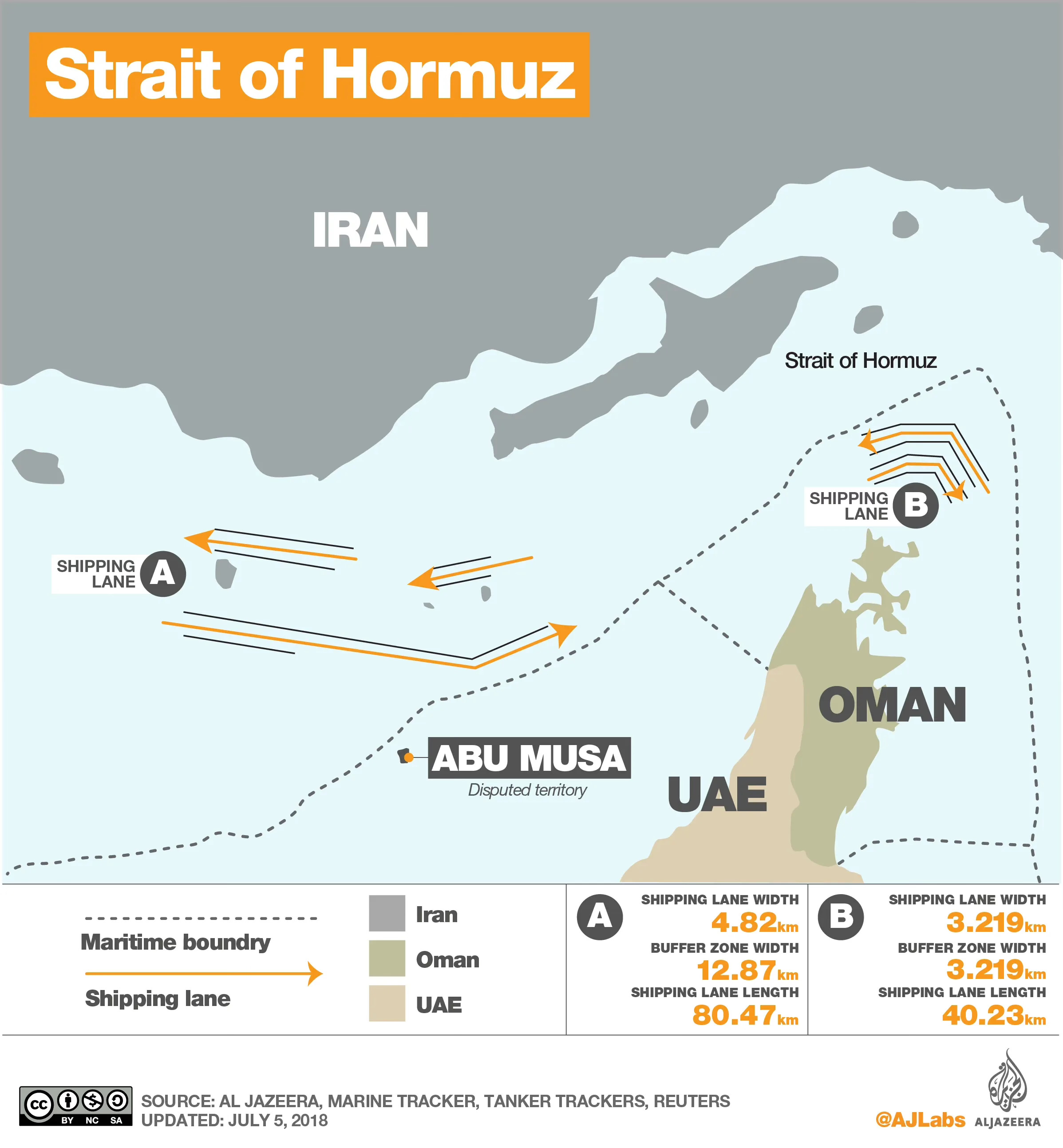
It has been a given among many Iran watchers that if Iran is attacked, it likely could try to close the Strait of Hormuz. This week, Iran has accomplished this “closure” with only drone attacks against several commercial vessels, simply stating that it has closed the waterway, and threatening to set ships “ablaze” if they try to pass. Commercial traffic through the strait has almost ground to a halt, resulting in the cost of Brent Crude surging to its highest level since 2023, above USD $90 a barrel on March 6. All that without Iran imposing a physical blockade or deploying even one mine, which would have even more serious repercussions for the oil and commodities markets. It could take several days for the U.S. to clear one shipping lane in the strait by sweeping for only one mine (or even one suspected mine).
Although most news media organizations are myopically focused on oil prices, between a quarter and a third of the global trade in the raw materials for fertilizer passes through the Strait of Hormuz. Almost half of the global population are fed by nitrogen fertilizers. And with fossil gas representing 60% to 80% of the production cost of nitrogen fertilizer, commercial shippers continuing to refuse to transit the strait (regardless if the U.S. pays for their insurance) would likely result in compounding or cascading effects that increase global food prices.
Expect Iran to deploy mines if it gets even more desperate and if airstrikes have not destroyed the mines and or the capability to deploy them. This capability includes the aforementioned degraded command and control. In a Fox News interview, Trump said the U.S. “largely destroyed their Naval Headquarters.” It is unclear if he was referring to their IRGC Navy, regular navy, or both.
Iran’s mining of the strait, depending on its duration, could drastically increase global oil and food prices.
Chem Tales
Iran might also pose a chemical weapons threat, as mentioned in the Defense Intelligence Agency’s unclassified 2019 report on the Iran’s military power:
“The United States is also concerned that Iran is pursuing central nervous system-acting chemicals for offensive purposes. Although these chemicals have legitimate uses as pharmaceuticals, they can be lethal at certain doses.”
And from the 2025 Annual Threat Assessment of the U.S. Intelligence Community:
“Iran very likely aims to continue R&D of chemical and biological agents for offensive purposes. Iranian military scientists have researched chemicals that have a wide range of sedation, dissociation, and amnestic incapacitating effects, and can also be lethal.”
Limitations and challenges to Iran’s deployment and use of chemical weapons would likely include the degraded command and control and military units’ unfamiliarity with the deployment and use of such weapons. Regardless, I assess that Iran’s use of chemical weapons is highly unlikely except as a panicked, very last resort to save the regime.
I’m just an honest used car salesman, not a Hezbollah operative
Terrorist attacks around the world are possible, limited by only the Iran Threat Network’s intent and capabilities. As I explain when I detailed Iran’s continued efforts to avenge the U.S. killing of Gen. Qasem Soleimani in January 2021, the ITN provides Iran with potent resources to support lethal activities—including kidnappings, assassinations, and bombings. By my count, Iran has plotted and attempted attacks, many successfully, in 42 countries since its 1979 revolution—including within the U.S.
Since 1997, at least 128 Hezbollah-affiliated individuals have operated in the U.S., according to open-source research. Nineteen of these individuals were charged with providing operational support to Hezbollah, including weapons procurement and pre-operational surveillance. These figures are based solely on public records such as court documents; the actual number of Hezbollah-linked operatives in the U.S. could be significantly higher. There could also be sleeper cells or individuals in the U.S. who are not affiliated with Hezbollah.
If I had to prioritize the regions about which I am most concerned in terms of Iranian-directed and facilitated terrorism outside of the Middle East, unranked they are South America, the U.S., and Europe. Maybe an article in the future that details my rational for selecting these regions, if there is interest among my readers. Let me know.
“A brief note on the legend of Pandora’s Box: Ever wondered why bundled in with all the torrents, and suffering of man kind the Gods put hope down there at the bottom, answer because in certain circumstances hope can be the worst torment of them all.” ― British novelist Tom Holt